Friday, 26 November 2010

Genre Specific Analysis: Devil Wears Prada

'The Devil Wears Prada' is a 2006 chick flick comedy by David Frankel, based on the famous novel by Lauren Weisberger. The Opening displays all of the key convensions of s chick flick, aiming its footage at a female audience. The film is stereotypical to its genre, because as it opens, the first shots are of a girl getting ready, and doing her hair and make up, this connotes the genre of the film because make up, hair, and all those girly things are key conventions of a chick flick.

The scene opens with a clip of the actor Anne Hathaway getting ready in the morning, this clip contains the names of two actresses in he film, 'Anne Hathaway' and 'Meryl Streep' because their names are the first to appear after the titles, we can easily guess that they are going to be the protagonists of the film. Also the text which their names are written in is red and gold, and in a calligraphy font, making it look feminine and delicate, connoting the female target audience and genre. The clip then cuts to a wide screened establishing shot of New York City. This connotes the setting of the film and that it is going to take place there.

In addition to the imagery, there is non-diegetic music being played. 'Suddenly i see' is a soundrack by KT Tunstall, the music is light hearted and ennergetic, which connotes a comical, girly theme. The lyrics of the song fit with the imagery, and describe a beautiful girl, and a woman aspiring to be just like her, this connotes ideas about what the film could be about, and what plots could be revealed.
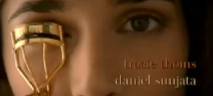
The opening scene is based upon the morning routine idea. It is set in various girls bedrooms and contains shots of them getting ready in the morning. The scene is created using parralell editing, creading the effect that the audience can see everything which is happening. From the start we can see that Anne Hathaway is the main character, becuase she gets the most screen time. However she is shown in contrast to the other girls. The toher girls in the scene are shown to be neat and glmorous. They also take their time in getting ready. Whilst on the other hand Anne Hathaway is shown to be scruffy and rushes herself. When the other girls are applying lipstick and eyeliner, Anne is shown to be quicly applying lipbalm then rushing out of the house. This creates a contrast in the opening scene and also makes it interesting as it starts to apply the personality of her character. This would engage the audience as they would want to follow her story. Also, the characteristics of the 'nerdy unpolular' girl are a stereotypical value of chick flick movies, where they end up falling in love, becoming sucsessfull and realising that they are beautiful, and people find this entertaining.

The scene uses Levi Strauss' theory of binarry opposites to show the lifestyle and personallity of the different girls. For example we are shown to view Anne Hathaways character as unpopular and scruffy, whilkst we are shown to see the other girls as neat and glamorous. The opposites show conflict between eachother as we see majour differences with the parralell editing, as we see opposites which make the scene more interesting and comical, as well as connoting key convensions of a chick flick.

Genre Specific Analysis: Love Actually

'Whenever I get gloomy with the state of the world, I think about the arrivals gate at Heathrow airport. General opinion makes out that we live in a world of hatred and greed. But I don't see that. Seems to me that love is everywhere. Often it's not particularly dignified or newsworthy, but it's always there. Fathers and sons, mothers and daughters, husbands and wives, boyfriends, girlfriends, old friends. When the planes hit the Twin Towers, as far as i know none of the phone calls from people on board were messages of hate or revenge, they were all messages of love. lf you look for it, I've got a sneaky feeling you'll find that love actually is all around.'

 
Love Actually, the 2003 romantic comedy by Richard Curtis opens in an entirely different way of those films similar to it. For example the stereotypical opening of a Romantic Comedy contains an opening of a plat containing the love between a man and a woman, establishing the main theme of the movie, and also introducing the key characters with a briefly explained plot. However Love Actually opens to a scene at Heathrow Airport, where relatives meet the passengers of the journey in the waiting area near christmas. The scene contains no characters from the film, no story line, it is completely irrelevant to the movie. On the other hand, the opening contains a short narrative, explaining that love exists in many ways, and that love actually is all around us. It also connotes that if you don't have love, or if you don't have someone, you have nothing.

The scene is set in Heathrow Airport, at a busy time of the day. Where the people arriving meet the people who have been waiting for them, to greet them. It opens with a wide angle shot of a crowded area in the airport. We see a woman walking through, and the camera pans to follow her, as she meets up with an old friend and hugs them. This connotes love and affection between them, as we follow her journey through the crowd to meet him, we start to feel empathy as she is shearching for them, then as she finds him we feel her emotion. The credits are set on the bottom half of the screen, and they are played throughout the scene, this makes it easier to concentrate on whats happening behind them, making it easier to follow the story.
The second shot consists of a slow motion mid screen shot. The slow motion gets the audience to carefully look at the emotion portrayed in the shot, and the feelings that are set in the scene. The mid shot of the mother being reunited with her children connoted the happiness she is feeling to be seeing them again, as both of the children run upto her in slow motion to greet her. The scene then continues with similar slow motion shots of different people with different stories, all being reunited with their loved ones. The scene contains a piece of quiet non-diegetic music which helps connote the slow motion shots and the emotion in the scene, this is a common idea which is very often seen in romances, so when people see the slow motion in the opening sequence, they can almost guess that the genre of the movie is going to be a romance. Secondly, 20 seconds into the scene, a non-diegetic voice is projected over the music to set the atmosphere and the theme by announcing how love 'is all around us'. This helps build emotion in the scene because it is dialouge of a theme everyone can relate to, as they all feel love to people in a variety of ways. However this voice over is spoken by the actor Hugh Grant, this actor is widely associated with romantic comedies and chick flicks due to his many roles performed in this genre, making him an important contributer to the setting of the genre and theme.

The scene uses Levi Strauss' narrative theory of binary opposites to show attraction and love in the scene. He uses opposites such as man/woman, adults/children, love/hate to motivate this simple narrative theory which connotes the conflict and attraction between opposites. The scene also uses Barthes' enigma code to set a mystery and to engage the audience in the movie. This has been done my making this scene different from the movie, it doesn't introduce any characters and plots, but it does give us ideas on the main theme. The director has chosen to do this because he wants to keep the rest of the movie seperated from the opening scene, to create a mysterious presence and to engage the audience to carry on watching so everything can be revealed.

Genre Moodboard


Our chosen genre is a Chick Flick. In this mood board we have collected images which represent the stereotypes which are portrayed in this genre. This would help us gain an understanding of what to include in our clip.

First Ideas

For my project, I have decided that I am going to work with Chrissy and Laura, and we are going to create the first 2 minutes of an opening scene of a chick flick, aimed towards teenage girls and young adult women.

Our idea is based on the stories of 2 people, which would be portrayed using a series of parallel edits. However we are using enigma code, to keep their characteristics hidden and to create a mysterious presence about them. However towards the end a problem emerges, which hopefully engages the audience as they would like to see the problem and story solved.

Thursday, 25 November 2010

From Script to Scene: Dexter


The original concept idea for dexter came when the director was designing the title. He noticed that the that the letter forms in 'Dexter' are nearly identical right-side up as they are up-side down.  This suited Dexter the character, because when he goes through his transformation into a serial killer, you dont notice many changes. He's exactly the same Dexter except that somethings wrong, keeping his serial killer and insane personality quiet and hidden, like a criminal mastermind.


The Title sequence itself was simply showing Dexter's average morning routine, however this had been filmed using extreme close ups and lighting to show how savage normal things can be. For example, in the first few seconds we see dexter wake up, and have a shave. However when we see dexter shaving, the action is shot in an extreme close up, and with film noire lighting it gives us a creepy impression 
of savageness, connoting to our views on the character of Dexter. Also with the position of his hands, and with the razor, it connotes the image of someone being strangled, and their throats being slit. This also connotes to Dexter's serial killer nature. 
The scene then continues to show Dexter accidentally cutting himself with his razor, and as we see the extreme lose up of dexter's blood running down his throat, we have a horrifying idea of what will come in the movie. 

Next in the scene, we are shown dexter making his breakfast. again the clips are shot with extrmeme close  ups and lighting. We see a shot of Dexter preparing some meat to fry, but we are greeted by a horrific close up view of him slashing the packet and cutting the meat up with a knife. This is shown in a savage violent way to connote the killings of his victims, and give us an insight to what will happen later in the movie. Finally, after his breakfast, we see Dexter preparing dental floss with his teeth. However with the close ups and lighting, the innocent act seems to connote a more violent meaning, and gives us the idea of Dexter strangling something with rope. This connotes to Dexters character because it shows us his violent nature, and what he could be capable of.

The director has used noir lighting and a shallow depth of field to create a savage atmosphere, to connote Dexter's character. The noir lighting is often associated with horror movies, and that general idea helps us associate Dexter with horror and thrillers, due to the lighting techniques. 


We see a short clip of Dexter grinding coffee in a machine, the shot contains noir lighting, and a shallow depth of field, and this connotes the idea that this simple every day task has been gloryfied into a violent image.
 All of the shots in the scene have been shot with the technique of extreme close ups, normal everyday activities are shown to be horrific and savage. For example, this quote was released by the producer of the movie:


"Everything, no matter how mundane or beautiful, has an undercurrent of violence to it. It is just a matter of how closely you look. We are conditioned to see a blossoming flower as beautiful. But if you look closely, if you look differently you will see it more like an explosion. Here we see a mundane morning routine illustrated in extreme close-ups showing the underlying tension found in everyday situations making violence a part of everything."

The scene contains music by Rolfe Kent. The producer originally intended to include the soundtrack by Xploding Plastix, but after editing it into the sequence they decided that it didn't suit the overall nature of Dexter. So the producer was advised to swap the track for one by Rolfe Kent, and after a few days of editing, they decided that the track suited the scene perfectly. The music went hand in hand with the imagery and gave the grotesque imagery a new, humerus light. However the music sounds quite eerie in a strange way, and its completely different from other genres. The music creates suspense perfectly and fits in with the actions and clips in the sequence.


Wednesday, 17 November 2010

Research analysis of the opening of Juno

key parts of the introduction:

Non-Diegetic music reveals a childish, innocent character of Juno, with the cheerful, whimsical music by a children's balladeer Barry Louis Polisar. It indicates that this movie is going to be a sweet, funny-sad film with an indie spirit.

At the start we see Juno walking from the real world into an animation world. This connotes the idea that she is a loner, escaping from reality into her own world. This explains that she has an imagination, which is very strong in people of a younger age, connoting her innocence and childish nature.

The handmade animation gives us an immature insight on the movie, and also helps us associate Juno as a child. The animation contains over 900 cutouts, all handmade and pieced together. The hand made titles also help us realise that Juno is of a young age, and that she is not adult and mature


In the opening scene, we see Juno drinking from a large Sunny D Bottle. The audience would associate Sunny D as a child's drink, it also associates her with teenagers, as she is walking along carelessly, drinking a sugar drink. This connotes a bit of rebellious and careless personality breaking through.


Finally, we see Juno walking from her animation world back to reality. This connotes her growing up and facing the dangers of the real world, maturing to cope with the current situation where she goes to buy a pregnancy test. This also engages the audience, as they come out of the happy animation and music, back to the reality in which Juno has to face.

Key Conventions


During our lesson we researched a variety of different opening sequences to study the key conventions in a film opening, we came up with a variety of ideas and analysis.


For example, the film 'Brick' uses enigma codes to set up questions that the audience want answers to. This helps to keep the audience engaged with the movie, and adds interest. The opening also includes no introduction of characters, making it mysterious and interesting.


Secondly, the film London to Brighton opens with a harsh disruption, this instantly engages the audience as it opens with a thrill, and uses enigma code again to set questions which we want to see resolved. T^his opening also introduces key characters, and gives us little information on their background and history, making them more mysterious and interesting.


Finally, the film Kick Ass introduces key characters fully, and gives us details of their history and personality. For example, we learn that 'Dave', from 'Kick Ass' is invisible to girls and wants to be a superhero so he can become somebody. We start to associate Dave as the main character and get involved with his story, this engages the audience as they want to see what he becomes.


Main Task

Main Task : Create the titles and opening of a new fiction film, to last a maximum of two minutes.
to stay organised we have set ourselves strict deadlines, these are:


Research Deadline: 26/11/10

Photo-storyboard Deadline: 3/12/10

Filming Deadline: 07/01/11

Production Deadline: 28/01/11

Evaluation Deadline: 11/02/11

Friday, 15 October 2010

Targets

To help improve my work and my grade I have decided to set myself specific targets to help me achieve more.


1 - Include pictures and screen shots to help explain my point of view. This will help demonstrate how I did my work and what skills it would of included.


2 - To provide more time for my work. My filming was rushed and we missed some shots out, to stoop this from happening I could of planned my work better and made more time to carry out the practical.


3 - I shall check my filming equipment thoroughly so I am sure my camera and other equipment works. This is because when I was filming our tripod broke, so I filmed the rest of our shots hand-held, so our footage was shaky and didn't look professional.

Thursday, 14 October 2010

Evaluation

From making our continuity video, we have learned a lot about continuity editing and camera shooting. We learned that continuity editing is used to make the footage more lifelike, and to make the audience feel more involved by making our editing continuous. This type of editing involves many rules. For example, whilst filming a conversation, the camera should and stay within the 180 degrees line and focuses on the person talking. The actors keep eye contact and never look at the camera. Also the two clips have to line up perfectly so the footage appears to be seamless.
Eye line Match
Match on Action


In our pre-production, to make our photo storyboards we used Digital SLR cameras to take pictures of our different camera angles and shots. The cameras were simple to use and produced professional looking photos. We didn’t realise how many different shots we would need to take for a 30 second video, so the complexity of the filming was a surprise.


To get our photos onto the storyboard, we uploaded our photos from the camera using a USB cable, then inserting the photos into our storyboard. Installing photos onto a computer was easy because it’s something I have done before. The storyboard and planning helped us organise ourselves so we could shoot the video. We had everything planned out, including the script, different angles and shots, and the duration.


Once our storyboard was finished we moved onto the filming. However to be more organised we could have selected our actors before we made our photo storyboard, because we had to find our actors at last minute when we were ready to shoot our film.


We filmed our footage using a digital video camera. The video camera was very easy to use, and we managed to get all our shots quickly. Because we had made and planned our storyboard specifically, our filming was very organised. To film our shots all we had to do was position the camera, press the record button, and shoot away.


The next step in our editing was to connect our camera to our computer and transfer our footage. To do this we used a programme called Adobe OnLocation. This allowed us to record selected clips and save them to our computer for further editing. To do this we played our footage through OnLocation and recorded specific footage which we would then like to edit. We then saved our clips into a folder on our Computer. The software was quite difficult to use, but once we had learned how to use it, it got easier and quicker to use.


Once we had completed that step, we then imported our saved clips into a programme called Adobe Premier, which allowed us to edit and piece together our video. To do this we had to position our saved clips on a timeline, and then crop them so that our footage matched up with the clip that followed, making our editing continuous. However we found this software quite difficult to use until we had learnt the basic controls, from there we found it quite simple. Also we had a few errors in our editing, where some shots didn’t match up exactly, and some shots were missing, so we went and filmed a few more clips, then edited them into our main footage.


Once we had completed our editing, we uploaded our finished video to youtube. We did this by uploading our video via the youtube uploader, after we had created our own account. Once we had done this a HTML code appeared underneath our video on youtube, when we posted this code into the HTML part of our blog post, the video is now viewable on our blog. However we had some difficulty with this, we tried to copy and paste the HTML code to the text part of our blog and it didn’t work.


Throughout our task I have posted our planning and activities to this blog, I have found this useful because it describes my events in a chronological order, helping me keep track. I can also look back and review the work I have done, this way I can help improve by making it better every time.

Wednesday, 6 October 2010

Post-Production

Once we had filmed our continuity video, we then had to use computer software to edit and piece our footage together.


To save our footage to our computer, we used a programme called Adobe OnLocation, where we could select the footage we wanted to edit and save it to our computer so we could work on it. Once we had finished that, we imported our saved clips into a programme called Adobe Premier Pro, which then allowed us to edit our footage and put it together. The whole editing process was simple and easy to use, enabling us to complete our video easily and quickly. Once we had finished editing, we uploaded our video to youtube, so we can post it here for you to see:


Production

Overall, our filming and production went quickly and smoothly. We managed to get the shots we needed in as little time as possible, and our actors were co-operative and friendly. They were professional and managed to keep in character and keep an eye line match when we were filming.


However, we had a few issues when we were filming, for example, our camera tripod broke halfway through filming, so we decided to hold the camera ourselves, this resulted in very shaky footage which couldn't be fixed. Secondly, our actor opened the door with his left hand, and then on our match on action shot, switched hands and opened the door with his left, breaking the continuity. However this was easily fixed with filming the correct shot. Finally we missed out a shot from our sequence, we had forgotten to include a cut in shot and we discovered this when we were editing, but we managed to fix this by shooting a cut in shot and applying it to our video in the editing process.

Pre-Production Task

Before we started filming our continuity video, we had to take certain steps to prepare and organise ourselves.

Firstly, we had to sketch and plan our storyboard, this included planning our different shots, the duration, and deciding on the topic of our interview. We used this drafted storyboard as a plan for one we would then make with photos and dialogue. The storyboard was needed because it helped us plan our filming step by step, so overall it made our filming faster and more organised.

After we completed our draft storyboard, we went on to make our photo storyboard. This storyboard was made up of photos of our different shots on the exact location where we would shoot our video. We chose to base our video on a police interview, where a policeman is asking a suspect about a mobile phone theft which happened a few days ago.  Our photo storyboard also included the dialogue our actors would say so we had a clear plan for when we were filming, we also had a detailed description of each shot and the duration of each shot. 

Friday, 24 September 2010

Continuity Editing

Today in our lesson we looked at continuity editing. 


Continuity editing is used to make editing look invisible and more realistic to the audience, so they can be more emotionally involved.


The essential elements of continuity editing include shots such as the shot - reverse shot, where the camera switches between two people in conversation using the 180 degree rule, where the camera swaps positions by 180 degrees. Another element is the eye line match, where the two people keep eye contact, to make the camera look invisible, making the whole scene more realistic.


Wednesday, 22 September 2010

Preliminary Task - Video Production

Preliminary Task 
For our first task we will be filming a short clip involving filming and editing a character opening a door, crossing a room and sitting down in a chair opposite another character, where they will then be interviewed on our chosen subject.  We will include different types of cinematography shots, including the 180-degree rule. Once this task is finished we will post it on here for you to view.


Welcome :)

Hi, my name's Amy, and I'll be using this blog for my AS media studies work
This will be used to post my preliminary and main task, and update with my work and progress.